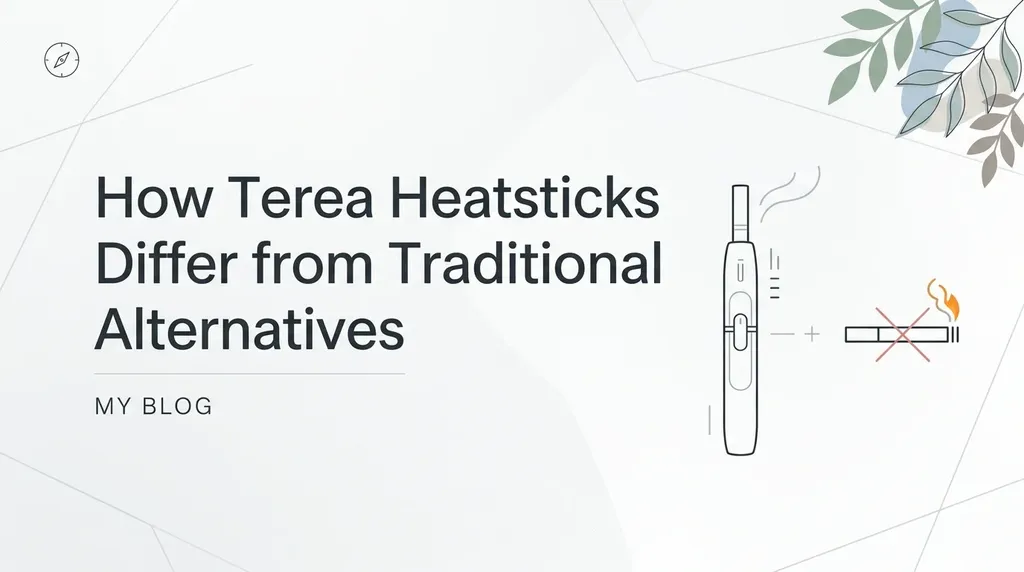
For anyone considering a switch from traditional cigarettes, one of the biggest questions is simply: how different is this actually going to feel? Heated tobacco has been around long enough now that it's no longer a novelty, but the gap between traditional smoking and induction-based systems like Terea is still something many newcomers underestimate.
This guide breaks down the core differences between traditional smoking and Terea's induction heating approach, covering everything from the underlying technology to how the transition typically feels for people coming from menthol or classic tobacco cigarettes. Whether you're curious about making the switch or simply want to understand what sets this format apart, here's what you need to know.
Starting with the Basics: Combustion vs. Heating
Traditional cigarettes work through combustion — tobacco is burned at high temperatures, typically well above 600°C, producing smoke that carries both nicotine and thousands of other combustion byproducts. This burning process is central to the traditional smoking experience, but it's also responsible for much of what makes the format harsh on the throat and lungs, along with the strong lingering odor that clings to clothes, hair, and furniture.
Terea sticks, by contrast, are never burned. Instead, they're heated to a much lower temperature, releasing a tobacco-flavored aerosol rather than smoke. There's no combustion, no ash, and considerably less lingering odor. This fundamental shift in process is what defines the entire heated tobacco category, and it's the starting point for understanding every other difference that follows.
Technology Shift Section
The technology behind this shift has evolved significantly even within the heated tobacco category itself. Earlier heated tobacco devices used a blade-style heating element that physically inserted into the tobacco stick, heating it from the inside via direct contact with a metal blade. While this was already a major departure from combustion, it came with its own drawbacks — namely, the need for regular cleaning to prevent tobacco residue buildup around the blade, and a heating pattern that wasn't always perfectly even.
Terea sticks represent the next step in this evolution, built specifically for induction heating rather than blade contact. Instead of a blade, an induction coil inside the device heats a metal element embedded directly within the tobacco plug itself. This creates a more even, consistent heating pattern across the entire stick, with no blade to maintain or clean.
This shift matters practically as well as technically. Because there's no blade involved, there's less mechanical wear on the device over time, and the heating consistency tends to feel smoother from the first draw to the last. For anyone exploring what's available within this newer format, browsing a full range of terea flavors dubai gives a good sense of how varied the category has become since moving away from blade-based heating.
Comparing the Sensory Experience
One of the most immediate differences newcomers notice is the sensory experience itself. Traditional cigarette smoke tends to be thicker, more pungent, and lingers noticeably longer on clothing and in indoor spaces. Terea's aerosol, by comparison, is lighter and dissipates far more quickly, with a noticeably milder smell that many former smokers describe as less intrusive to those around them.
Taste is another area where the two diverge. Combustion inherently introduces some level of burnt or ashy character to the flavor profile of traditional cigarettes, which heated tobacco simply doesn't produce in the same way. Because Terea sticks are heated rather than burned, the tobacco flavor tends to come through in a cleaner, more defined way — though it's worth noting this is still a distinct experience from traditional smoking, not an identical replica of it.
Throat sensation is often described differently as well. Many users transitioning from traditional cigarettes note that the heated aerosol feels smoother and less harsh, particularly after the first few sessions of adjustment. This is largely attributed to the absence of combustion byproducts that typically contribute to throat irritation in traditional smoking.
Menthol Transition Option Section
For menthol smokers specifically, finding an equivalent sensation in heated tobacco is often a top priority when making the switch. The cooling, refreshing quality that menthol cigarettes are known for doesn't automatically carry over to every heated tobacco option, which is why choosing the right variant matters for this particular group of users.
The terea turquoise option has become a popular starting point for former menthol smokers, offering a cooling sensation designed to echo the refreshing quality menthol users are accustomed to. While the underlying heating technology is entirely different from a combustion cigarette, the aim with this kind of variant is to preserve that familiar cooling character during the adjustment period, making the transition feel less jarring.
For menthol smokers considering the switch, it's worth approaching the first few sessions with realistic expectations — the cooling sensation is present, but the overall experience will still feel distinctly different from a traditional menthol cigarette given the difference in heating method. Most users find that after a short adjustment period, the format starts to feel natural rather than like a compromise.
Tobacco Transition Option Section
Classic tobacco smokers face a similar consideration, though their priority tends to be finding a heated tobacco option that captures a familiar, robust tobacco character rather than a cooling sensation. Since Terea sticks don't rely on combustion, replicating that traditional tobacco intensity requires careful blend construction rather than simply burning stronger tobacco.
For users coming from classic, full-flavor cigarettes, Terea Sienna is often recommended as a starting point, designed to offer a fuller, more robust tobacco character that aligns with what traditional smokers are used to. Rather than a light or transitional blend, this option leans into a more substantial tobacco profile, aiming to ease the adjustment for those who don't want to compromise on intensity when making the switch.
As with the menthol transition, it helps to go in with the understanding that heated tobacco will never be a perfect one-to-one replacement for combustion cigarettes — the underlying process is simply too different. However, many long-time smokers report that after the initial adjustment period, a well-matched heated tobacco option becomes a satisfying long-term alternative rather than a lesser substitute.
What This Means for Someone Considering the Switch
If you're weighing whether to move from traditional cigarettes to a heated tobacco format like Terea, it helps to think of it less as a direct substitute and more as a related but distinct experience. The technology, sensory profile, and overall ritual all differ in meaningful ways — no combustion, no ash, less lingering odor, and a generally smoother, more consistent draw thanks to induction heating.
For most newcomers, the key to a successful transition lies in choosing the right starting flavor based on their previous smoking habits, whether that means leaning toward a cooling option to replicate a menthol preference or a fuller-bodied blend to match a classic tobacco habit. Giving yourself a short adjustment period, rather than expecting an identical experience from the very first stick, tends to make the switch feel far more natural.
Final Thoughts
The shift from traditional smoking to Terea's induction heating system represents a genuine technological departure, not just a marketing distinction. Understanding these core differences — from how the tobacco is heated to how the sensory experience compares — puts you in a much better position to choose the right starting point for your own transition, and to set realistic expectations for what the format can and can't replicate from traditional cigarettes.